December 4, 2013

IS THE UK CHANCELLOR OF THE EXCHEQUER READING THIS BLOG?


STOP PRESS! Lola here with a question: is the UK Chancellor of the Exchequer, George Osborne, reading this blog? I ask this 'cos he's just posted a pic of his new puppie, a white bichon frise called - you guessed! - LOLA! 

Just look: Lola could be moi as a puppy (see sidebar, below!) 

Watch this space for any snippets of earth-shattering insider gossip information from Downing Street - just between one Lola and - another... 


Now where we, dear readers? Ah yes, continuing our mini virtual tour of the UK where, this week, C is for the city of *C*hester...

Founded as a Roman fort, Chester has just been voted Europe's fifth prettiest by American newspaper USA Today. The paper explained: "In Chester, Roman walls surround a charming collection of Tudor and Victorian buildings and a delightful shopping district filled with half-timbered shops reminiscent of a Grimm tale. There's not a modern structure in sight, making Chester one of the most popular destinations for visitors to Cheshire."
The more unusual landmarks in this Cheshire city lying on the River Dee are its walls, the Rows and the black-and-white architecture.

The walls encircle the bounds of the medieval city and constitute the most complete city walls in Britain, the full circuit measuring nearly 2 miles (3 km). The only break in thecircuit is in the southwest section in front of County Hall. A footpath runs along the top of the walls, crossing roads by bridges over Eastgate, Northgate, St Martin's Gate,Watergate, Bridgegate, Newgate, and the Wolf Gate, and passing a series of structures, namely Phoenix Tower (or King Charles' Tower), Morgan’s Mount, the Goblin Tower with a spur leading to the Water Tower & Thimbleby’s Tower.


Walls linking Bridgegate to Eastgate:


On Eastgate is Eastgate Clock, allegedly the most photographed clock in England after London’s Big Ben (above top & below):


The Rows are unique in Britain. They consist of buildings with shops or dwellings on the lowest two storeys. The shops or dwellings on the ground floor are often lower than the street and are entered by steps, which sometimes lead to a crypt-like vault. Those on the first floor are entered behind a continuous walkway, often with a sloping shelf between the walkway and the railings overlooking the street. 

Bridge Street showing Chester Rows and St Peter’s Church:


Much of the architecture of central Chester looks medieval and some of it is but by far the greatest part of it, including most of the black-and-white buildings, is Victorian, a result of what is called the “black and white revival”.

Black and white architecture at Northgate:


And, finally, thank you to all my dear readers who visited or commented.
Enjoy!

XOXO NORA & LOLA:)

..............................................................................................................................................................................................................

November 27, 2013

IT'S BATH TIME!


Dear readers, this week, B is for: It’s *B*ath time!

The city of Bath was first established as a spa named Aquae Sulis ("the waters of Sulis") by the Romans sometime in the AD 60s about 20 years after they had arrived in Britain (AD43), although oral tradition suggests that Bath was known before then. They built baths and a temple on the surrounding hills of Bath in the valley of the River Avon around hot springs. Edgar was crowned king of England at Bath Abbey in 973. Much later, it became popular as a spa town during the Geogian era (made famous in her novels by Jane Austen),which led to a major expansion that left a heritage of exemplary Georgian architecture crafted from  golden Bath stone.
Bath has a variety of theatres, museums, and other cultural and sporting venues, which have helped to make it a major centre for tourism, with over one million staying visitors and 3.8 million day visitors to the city each year.
 
Bath, situated 97 miles (156 km) west of London and 13 miles (21 km) south-east of Bristol and an UNESCO World Heritage Site, has some of the most beautiful architecture in Europe. 

Here are some examples:

Pulteney Bridge (18th century - by Robert Adam)


Bath Spa 


Bath Abbey


The Royal Crescent


Georgian taste favoured the regularity of Bath's streets and squares and the contrast with adjacent rural nature


And, finally, thank you to all my dear readers who visited or commented.
Enjoy!

XOXO NORA & LOLA:)

PS Have been very busy of late with travel and work commitments so apologies if  haven't always had time to leave comments!

November 13, 2013

NEED A LITTLE ZEST IN YOUR LFE?


Dear readers, this week, Z is for NEED A LITTLE *Z*EST IN YOUR LIFE? Or VACATION? Maybe take an idea from these politicians’ vacation spots (or maybe not!)

PM David Cameron & wife (Cornwall, UK, below)

President Barach Obama & daughter (Martha’s Vineyard)

President Vladimir Putin (Siberia)


Former President Yeltsin (Black Sea)

German Chancellor Angela Merkel (Ischia, Italy)


Tony Blair with Belusconi (Sardinia)

Former French President Nicolas Sarkozy & wife (France)

Former PM Margaret Thatcher & husband (Cornwall)

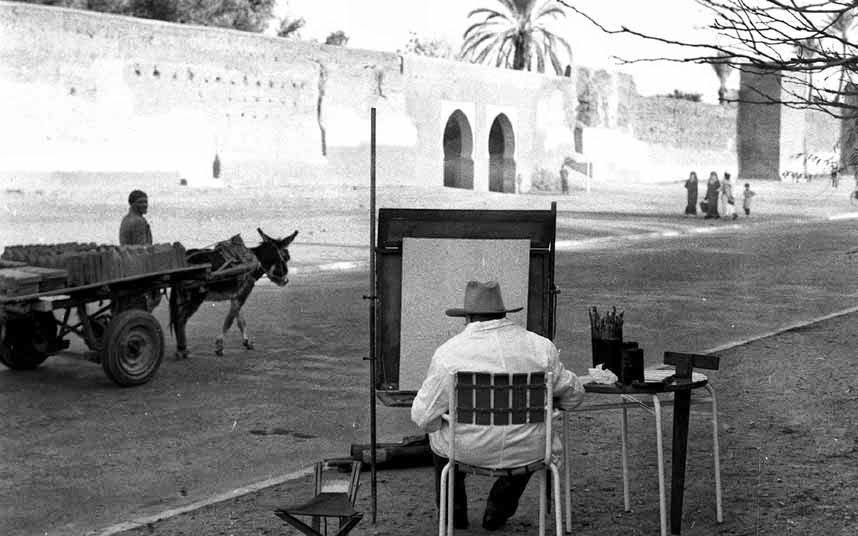
Former PM Churchill (Marrakesh)

FANCY ANY OF THESE HIDEAWAYS OR GOT ONE OF YOUR OWN?

HOW DO YOU ADD ZEST TO YOUR LIFE - ANY SECRETS ?(THEY'RE SAFE WITH ME!) 

And, finally, thank you to all my dear readers who visited or commented.
Enjoy!
XOXO NORA & LOLA:)


November 6, 2013

YORKSHIRE ...

Swaledale, Yorkshire


Dear readers, this week, Y is for *Y*orkshire, England ...

And Lonely Planet’s Best in Travel 2014 guide rates Yorkshire third-best region in the world: 

“This rough-around-the-edges gentleman of the north has kicked away the walking cane. Bradford has become the world’s first Unesco City of Film, fashion-thirsty Leeds has cut the ribbon on an ambitious retail development, the new state-of-the-art Hepworth gallery in Wakefield (below) is giving London a run for its money and Yorkshire now has more Michelin-starred restaurants than any other county outside London.”

As for the city of York, this was founded by the Romans under the name of Eboracum in AD 71. It became the capital of the Roman province of Britannia Inferior, and later of the kingdoms of Northumbria and Jorvik. In the Middle Ages, York grew as a major wool trading centre and became the capital of the northern ecclesiastical province of the Church of England, a role it has retained. Here are some images of the city:

York Minster (closeup, above - and below)


An aerial view of the city:
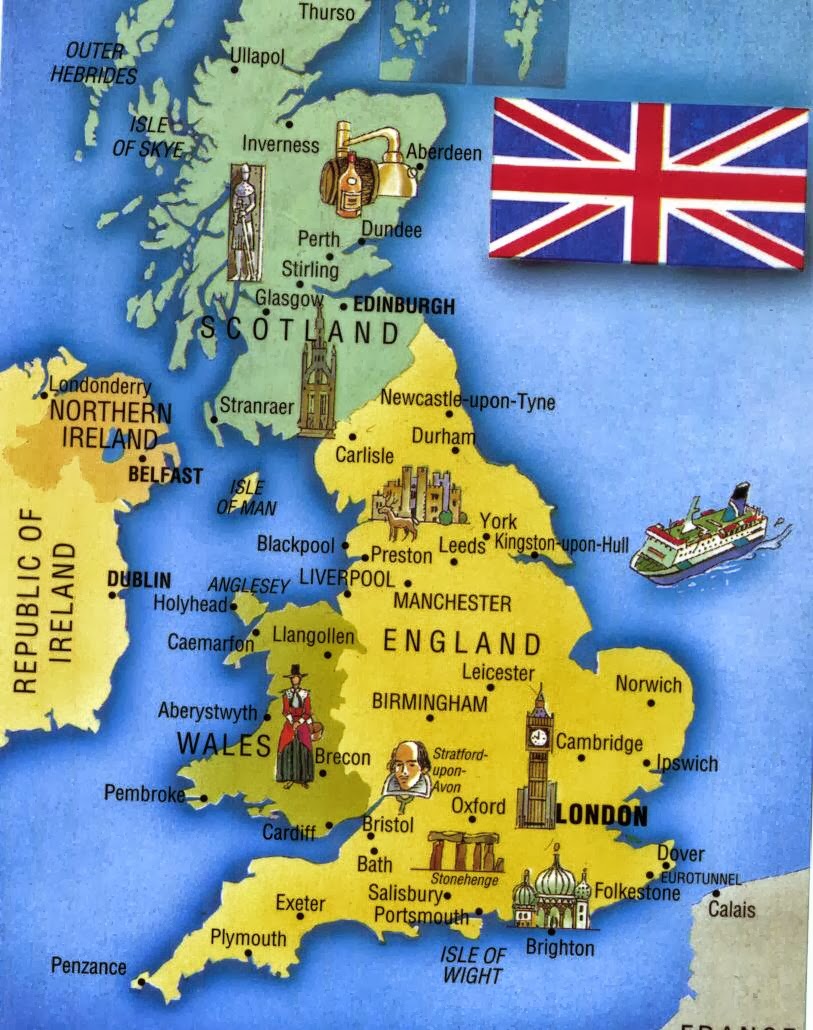
and its location within the UK:

The medieval Micklegate or “Great Street” from Old Norse gata or street


13th century City walls


Different shots of the River Ouse


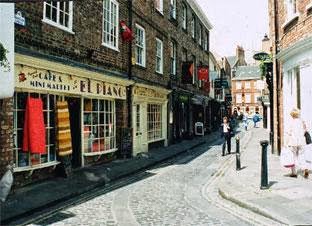
Renowned medieval street, The Shambles


and equally famous Swinegate

The Jorvik Viking Centre, a museum and visitor attraction, created by the York Archaeological Trust in 1984.

and finally Barley Hall, off Stonegate, a reconstructed medieval townhouse, originally built around 1360 by the monks of Nostell Priory and later extended in the 15th century:

Finally, on a completely different note, many thanks to all of you who’ve purchased my novels, The De Clerambault Code , Soul Stealer and Retribution – which I wrote about here three weeks ago. And helping The De Clerambault Code, at the time of writing, reach the top 80 eBook thrillers on Amazon!  


And, finally, thank you to all my dear readers who visited or commented.
Enjoy!
XOXO NORA & LOLA:)